Mortgage rates just crossed 7%. Here’s why.
The average 30-year fixed mortgage hit 7.03% in Freddie Mac’s survey for the week ending September 24, 2026. That’s the first reading above 7% since January 2025. Just three weeks earlier, it sat at 6.71%.
If you’re buying, selling or refinancing on Long Island, you’ve felt it. The short answer: inflation is running hot, bond investors are demanding more, and the Federal Reserve just raised rates for the first time since 2023.
Below, we break down how those three forces connect, and the single best indicator to watch if you want to know where mortgage rates are headed next.
The best mortgage rate indicator: the 10-year Treasury
Want to know where mortgage rates are going? Watch the 10-year Treasury yield. (You’ll often hear it called the “10-year T-bill,” but technically it’s a Treasury note. Bills mature in a year or less.)
Why the 10-year? Most 30-year mortgages are paid off or refinanced in roughly 7 to 10 years. So investors who buy mortgage bonds compare them to the 10-year Treasury, the safest investment with a similar life span. Mortgages are riskier, so they pay a premium on top.
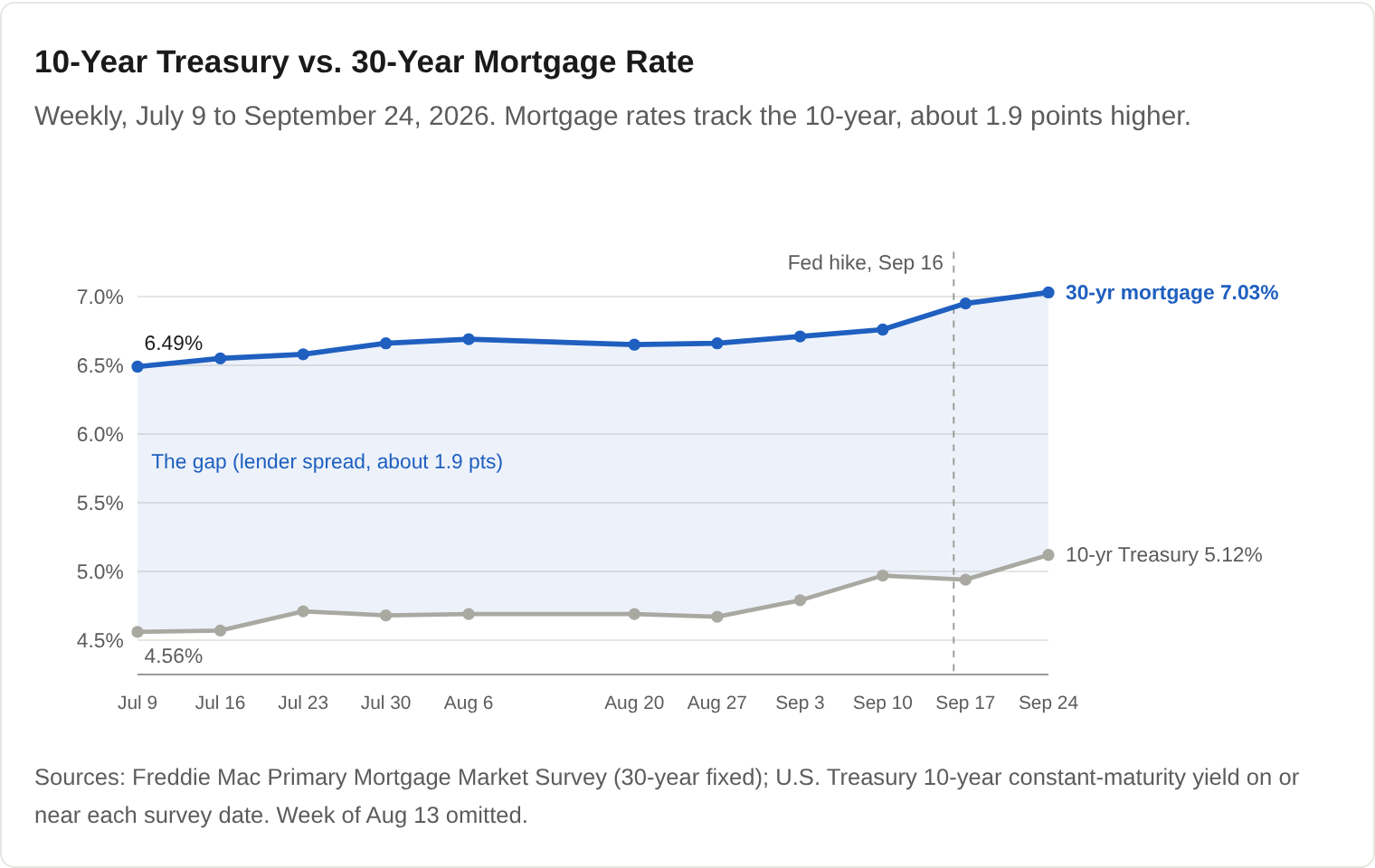
The two lines move almost in lockstep. On September 23, the 10-year closed at 5.11%, its highest level since 2007. The 30-year mortgage followed it right over 7%.
Inflation is the engine behind higher rates
Think of a bond as a promise: lend the government $1,000 today, get a fixed payment back for 10 years. If prices are rising 3.4% a year, that fixed payment buys less and less. So when inflation runs hot, investors demand a higher yield to protect their buying power. When yields rise, mortgage rates rise with them.
And inflation has been stubborn. Headline inflation was 3.4% in August 2026, up from 2.9% a year earlier. It peaked at 4.2% in May, as the conflict with Iran sent oil prices soaring.
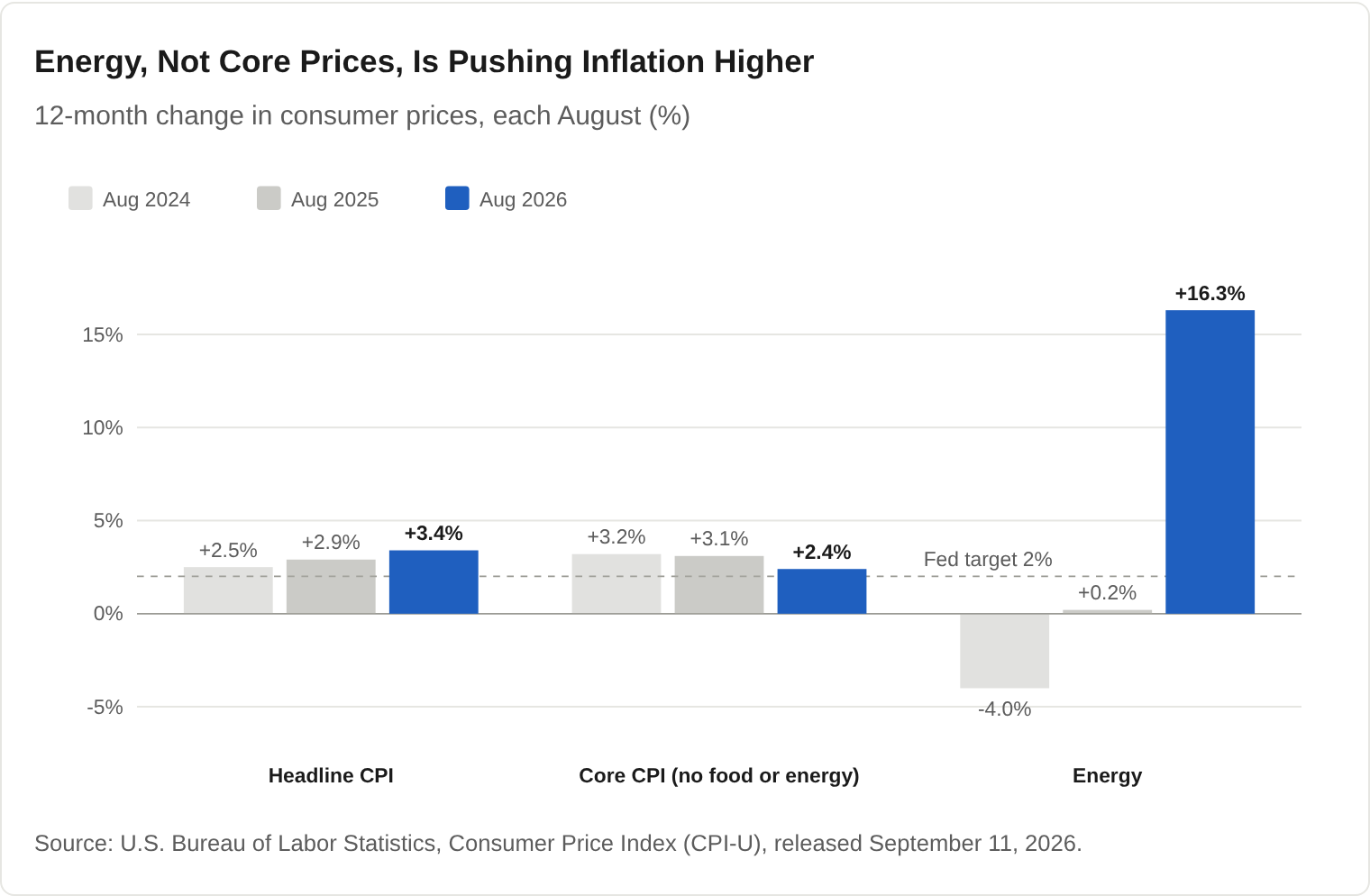
The chart tells a split story. Core inflation (everything except food and energy) has actually cooled to its lowest level since 2021. Gasoline alone is up 27% from a year ago. The bond market’s worry is that high fuel costs eventually spill into everything else, from shipping to groceries. That fear, not today’s core number, is what’s pushing the 10-year yield toward 5%.
The Fed raised rates. But the Fed doesn’t set your mortgage rate.
On September 16, 2026, the Federal Reserve raised its benchmark rate by 0.25% to a range of 3.75%–4.00%. The vote was unanimous, and it was the first hike since 2023 and the first major move under Chair Kevin Warsh. Fed officials also signaled at least one more increase is possible before year-end.
Here’s the part most people miss: the federal funds rate is an overnight rate between banks. It directly moves credit cards, HELOCs and adjustable-rate loans. A 30-year fixed mortgage is a long-term loan, so it follows long-term bond yields instead.
The Fed still matters. When it signals it’s serious about inflation, bond investors adjust their expectations, and that shows up in the 10-year Treasury yield within hours. That’s exactly what happened in September.
What it means for Long Island buyers and sellers
On Long Island, loan amounts are large, so small rate moves hit hard. Here’s what a $600,000, 30-year fixed loan costs each month at different rates.
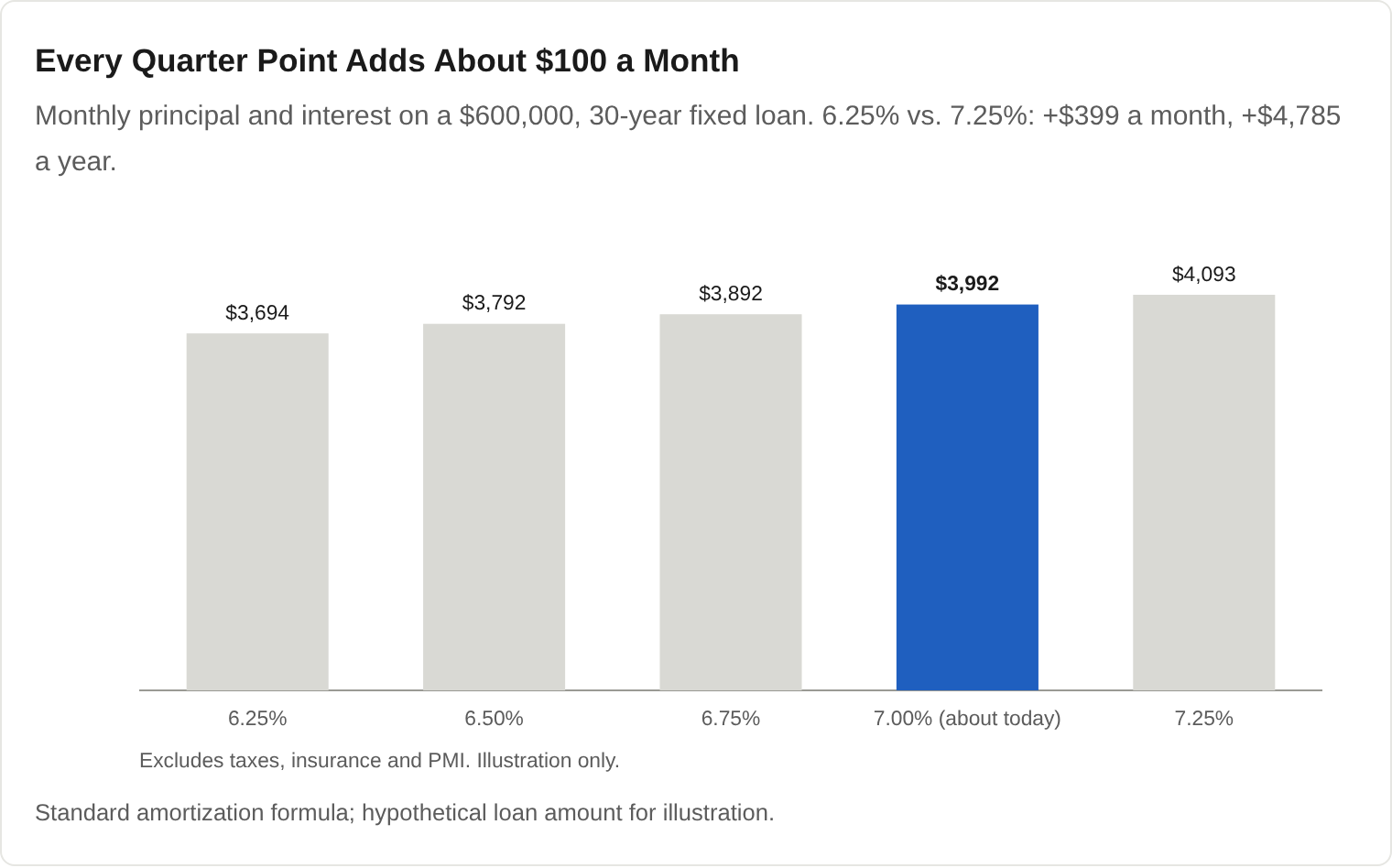
For buyers: Get pre-approved now and ask your lender about rate locks and float-down options. Shop at least two or three lenders; quotes can differ meaningfully. Ask about buydowns, where a seller credit lowers your rate for the first years.
For sellers: Buyers are paying closer attention to monthly payments, so pricing right from day one matters more than ever. Offering a closing credit toward a rate buydown can widen your buyer pool without cutting the list price.
For current owners: If you have a sub-4% mortgage, the “lock-in effect” is real. Before deciding to move, compare your full monthly cost now with what you’d pay at today’s rates.
What to watch next
If you only track one number, track the 10-year Treasury yield. Beyond that, four things will move rates this fall:
- Monthly CPI reports. If core inflation keeps cooling and oil settles, yields can ease.
- Oil and the Middle East. Energy has been the biggest driver of headline inflation this year.
- The Fed’s next meeting. Another hike is on the table; a pause would likely calm the bond market.
- Freddie Mac’s Thursday survey. It’s the national benchmark, released every week.
The bottom line
Rates are higher because the bond market is pricing in stubborn inflation, not because of any single headline. Nobody can time the market perfectly. Talk to a lender about rate locks and buydown options, and talk to a local agent about what today’s rates mean for prices in your town.
Thinking about buying or selling in Nassau, Suffolk or Queens? Contact Educators Realty for a no-pressure conversation about your options.
This article is for general educational purposes and is not financial or lending advice. Rates change daily. Consult a licensed mortgage professional for a quote based on your situation.
By:
Christopher Robson
Licensed Real Estate Broker
Molloy University Real Estate Faculty
(516) 459-9564
chris@educatorsrealty.com