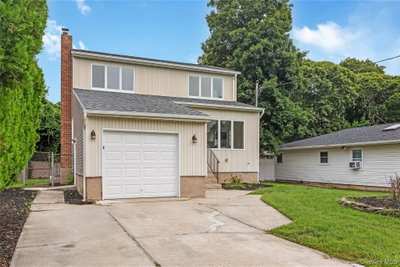
By Educators Realty · Syosset, NY · Educators Realty
Bank-owned properties — often called REOs, short for "real estate owned" — give Nassau County buyers a distinct way into the market. These are homes that reverted to a lender after a completed foreclosure, and they're now being resold, typically through the local MLS just like any other listing. Because pricing, condition, and terms can vary widely from one bank-owned property to the next, buyers who understand how this segment of the market behaves tend to make faster, more confident decisions. This guide walks through what's currently available across Nassau County, what the recently closed bank-owned and foreclosure sales tell us about pricing and pace, and how to approach a purchase in this category the right way.
REO, Foreclosure, and Short Sale: Why the Terms Matter
These terms get used interchangeably, but they describe different stages of the same process. A pre-foreclosure or short sale is still owned by the original homeowner, who is selling with lender approval, often for less than what's owed on the mortgage. An REO, or bank-owned property, is a home the lender has already taken back through foreclosure and now owns outright. Some of the properties in Nassau County's current inventory are also being sold at auction, which comes with its own bidding process, deposit requirements, and buyer's premium.
Knowing which category a listing falls into changes how an offer gets structured, how quickly a lender is likely to respond, and what kind of inspection contingencies are realistic. A buyer's agent who works in this space regularly can help sort through which approach fits a given property.
What Nassau County's Current Bank-Owned Inventory Looks Like
As of this writing, Educators Realty's Nassau County bank-owned and foreclosure inventory includes 45 active listings, with asking prices ranging from $335,000 for a one-bedroom co-op in Rockville Centre up to $2,900,000 for a property in Hicksville. The median asking price across the current inventory is $729,999, and the average is roughly $840,000 — a spread wide enough that this segment includes everything from entry-level condos to multi-million-dollar estates.
Where the Listings Are Concentrated
Listings are spread across more than 20 Nassau County communities rather than clustered in one or two towns. Hempstead currently has the most bank-owned listings (5), followed by Westbury and Baldwin (4 each) and Freeport (3). Smaller pockets of activity appear in Glen Cove, Levittown, Rockville Centre, Hicksville, Massapequa, and Elmont (2 each), with single listings found in communities including Williston Park, Long Beach, Muttontown, East Hills, Old Westbury, Farmingdale, Uniondale, West Hempstead, Garden City, Island Park, Roslyn, N. Merrick, Wantagh, Malverne, E. Rockaway, Gibson, and Point Lookout.
Property Styles and Features
Colonial-style homes make up the largest share of the current inventory, followed by Ranch and Cape Cod-style homes, with a handful of Hi-Ranch, Split-level, Tudor, and Bungalow properties rounding out the mix. A garage is mentioned in more than half of the current listing descriptions (25 of 45), and most of the single-family inventory includes a formal dining room and/or full basement, based on the listing descriptions provided.
A Range of Buyer Scenarios
The current inventory covers a range of buyer scenarios. On the water, there's a one-bedroom waterview condo in Freeport and a renovated, FEMA-compliant waterfront Colonial in Island Park. For land or ground-up projects, there's a vacant land listing in Long Beach. One Hempstead property is listed as part of an upcoming auction, subject to a buyer's premium, and a Baldwin property is described as owner-motivated with openness to a lease-option or leaseback arrangement. At the upper end, buyers will find a luxury Ranch estate in Muttontown listed at $1,330,000, along with multi-million-dollar listings in Old Westbury, East Hills, Roslyn, and Hicksville.
What Recently Closed Bank-Owned Sales Tell Us
A separate closed-sales report covering 197 recently completed bank-owned and foreclosure transactions across Nassau County shows an average closing price of $686,270, with sales closing at roughly 100% of the original list price on average — though individual ratios varied, with some properties closing below list and others above, particularly land or unusual condition properties. Closed bank-owned sales were most concentrated in Hempstead (17 closings), followed by Freeport and Elmont (13 each), and Baldwin and Valley Stream (11 each), which roughly tracks the towns most represented in the current active inventory as well. Closings were recorded in every month across the report period, with November standing out as the busiest single month (20 closings).
45Active Bank-Owned Listings
$335K–$2.9MCurrent Price Range
$686,270Avg. Recent Closed Price
~67 DaysAvg. Days on Market (Closed)
~100%Avg. Close-to-List Ratio
Nassau County Bank-Owned & Foreclosure Properties Currently Listed
The listings below reflect current bank-owned and foreclosure inventory in Nassau County. Each property links directly to its full detail page, including additional photos and disclosures.

15 Stratford Avenue, Williston Park
$880,000
3 Beds | 2 Baths
Move right into this 3 bedroom, Colonial style home, with full basement, 1-car garage, updated designer kitchen w/ quartz counters and stainless-steel appliance, updated ...
MLS #1039973 · Courtesy of OneKey MLS
View Property Details

71 Valentine Avenue, Glen Cove
$780,000
2 Beds | 2 Baths
Move right into this Expanded Ranch style home, with full basement, 1-car garage, updated designer kitchen w/ quartz counters and stainless-steel appliance, updated bathr...
MLS #1038951 · Courtesy of OneKey MLS
View Property Details

61 E Fulton Street, Long Beach
$395,000
Land.
MLS #1040611 · Courtesy of OneKey MLS
View Property Details

11 Parkwood Road, Westbury
$800,000
4 Beds | 2 Baths
Move right into this updated 4-bedroom, 2 Bathroom, Cape style home, with full basement, 1-car garage, updated designer kitchen w/ quartz counters and stainless-steel app...
MLS #999978 · Courtesy of OneKey MLS
View Property Details

1037 Broadway, Westbury
$575,000
4 Beds | 1 Bath
Welcome to Westbury! A great opportunity for an investor or end user to transform this property into a home tailored to your vision and lifestyle. Conveniently located cl...
MLS #1036927 · Courtesy of OneKey MLS
View Property Details

8 Woodstock Court, Muttontown
$1,330,000
5 Beds | 4 Baths
LUXURY RANCH ESTATE - Muttontown, New York This exceptional ranch-style estate represents a rare opportunity in Muttontown s luxury real estate market. Set on 2.8 acres ...
MLS #1035521 · Courtesy of OneKey MLS
View Property Details

840 Kings Parkway, Baldwin
$700,000
5 Beds | 2 Baths
This Colonial Style Home Features 5 Bedrooms, 2 Full Baths, Eat In Kitchen & 1 Car Garage. The information provided is estimated to the best of our abilities at this time...
MLS #1030944 · Courtesy of OneKey MLS
View Property Details

4 Broadfield Place, Glen Cove
$629,900
4 Beds | 4 Baths
Spacious Hi-Ranch offering 4 bedrooms, 3 full baths, a bright living room, comfortable den, and an eat-in kitchen. This home offers a flexible floor plan with plenty of l...
MLS #1028957 · Courtesy of OneKey MLS
View Property Details

86 George Street, East Hills
$1,950,000
4 Beds | 4 Baths
Move right in to this renovated Colonial style home w/ 4 bedroom, 3.5 bath w/ new kitchen, Refurbished wood floors, fresh paint, etc. Centrally located to all. Don’t miss...
MLS #1026483 · Courtesy of OneKey MLS
View Property Details

27 Midwood Street, Hempstead
$620,000
3 Beds | 2 Baths
This Ranch Style Home Features 3 Bedrooms, 2 Full Baths, Formal Dining Room, Eat In Kitchen & 2 Car Garage. The information provided is estimated to the best of our abili...
MLS #1025767 · Courtesy of OneKey MLS
View Property Details

30 Pierson Avenue, Hempstead
$635,000
4 Beds | 2 Baths
Cape Style Home. This Home Features 4 Bedrooms, 2 Full Baths, Formal Dining Room, & 1 Car Garage. Centrally Located To All. Don't Miss This Opportunity!
MLS #1020072 · Courtesy of OneKey MLS
View Property Details

725 Miller Avenue Unit #238, Freeport
$410,000
1 Bed | 1 Bath
This Waterview Condo Style Home Features 1 Bedroom, Full Bath, Eat In Kitchen & Assigned Parking. The information provided is estimated to the best of our abilities at th...
MLS #1022648 · Courtesy of OneKey MLS
View Property Details

117 Warner Avenue, Hempstead
$579,900
3 Beds | 2 Baths
Property will be included the next Auction. All auction properties are subject to a 5% buyer s premium pursuant to the Event Agreement and Auction Terms & Conditions min...
MLS #1022505 · Courtesy of OneKey MLS
View Property Details

32 Valley Road, Old Westbury
$1,899,900
5 Beds | 5 Baths
Nestled in the prestigious community of Old Westbury, 32 Valley Road is a recently renovated 5-bedroom, 3.5-bath residence offering approximately 3,900 sq. ft. of refined...
MLS #1020445 · Courtesy of OneKey MLS
View Property Details

5 Columbia Street, Farmingdale
$730,000
4 Beds | 2 Baths
Move right into this updated 4-bedroom, 2 Bathroom, Colonial style home, with full basement, 1-car garage, updated designer kitchen w/ quartz counters and stainless-steel...
MLS #1019049 · Courtesy of OneKey MLS
View Property Details

172 Evergreen Drive, Westbury
$770,000
3 Beds | 3 Baths
Outstanding split style home with brick and fieldstone, boasting a 2-car detached garage and exceptional mid-block location. This beautiful home has a fantastically open...
MLS #1017905 · Courtesy of OneKey MLS
View Property Details

7 Mockingbird Lane, Levittown
$720,000
4 Beds | 2 Baths
This Ranch Style Home Features 4 Bedrooms, 2 Full Baths, Eat In Kitchen & 1 Car Garage. The information provided is estimated to the best of our abilities at this time.
MLS #1017871 · Courtesy of OneKey MLS
View Property Details

55 Lenox Road Unit #3X, Rockville Centre
$335,000
1 Bed | 1 Bath
Freshly painted, cleaned, and ready to go. Oversized bedroom with 2 closets. Extensive storage throughout the unit. Laundry room, bike storage, and mail room on 1st fl...
MLS #895294 · Courtesy of OneKey MLS
View Property Details

79 Elmwood Avenue, Hempstead
$650,000
3 Beds | 2 Baths
Colonial Style Home. This Home Features 3 Bedrooms, 1.5 Baths, Formal Dining Room, Den & 1 Car Garage. Centrally Located To All. Don't Miss This Opportunity!
MLS #1005703 · Courtesy of OneKey MLS
View Property Details

27 Circle Drive, Hempstead
$729,999
5 Beds | 3 Baths
Welcome to Hempstead! Newly renovated property ready to be your next property! Close drive to southern state pkwy, peninsula blvd, parks, hempstead golf & country club,...
MLS #1012411 · Courtesy of OneKey MLS
View Property Details

64 Ketcham Avenue, Hicksville
$870,000
4 Beds | 2 Baths
This Colonial Style Home Features 4 Bedrooms, 2 Full Baths, Formal Dining Room, Den & 1 Car Garage. The information provided is estimated to the best of our abilities at...
MLS #1014174 · Courtesy of OneKey MLS
View Property Details

863 Prospect Avenue, Westbury
$670,000
4 Beds | 2 Baths
4-bedroom, 2 bathroom, Cape Style home, with full finished basement, 1-car garage, updated kitchen w/quartz counter, new stove, freshly painted. Near local shopping, tra...
MLS #1012272 · Courtesy of OneKey MLS
View Property Details

6 Midland Avenue, Hicksville
$2,900,000
-
MLS #1008513 · Courtesy of OneKey MLS
View Property Details

259 Lincoln Avenue, Rockville Centre
$860,000
3 Beds | 1 Bath
This Colonial Style Home Features 3 Bedrooms, Full Bath, Formal Dining Room, Kitchen & 1 Car Garage. The information provided is estimated to the best of our abilities at...
MLS #1007248 · Courtesy of OneKey MLS
View Property Details

634 Hillside Court, Uniondale
$685,000
4 Beds | 2 Baths
This Cape Style Home Features 4 Bedrooms, 2 Full Baths, Eat In Kitchen & Driveway Parking. The information provided is estimated to the best of our abilities at this time...
MLS #1007254 · Courtesy of OneKey MLS
View Property Details

121 Farmedge Road, Levittown
$750,000
4 Beds | 2 Baths
This Expanded Ranch Style Home Features 4 Bedrooms, 2 Full Baths, Formal Dining Room & Carport. The information provided is estimated to the best of our abilities at this...
MLS #1004273 · Courtesy of OneKey MLS
View Property Details

234 Sycamore Street, West Hempstead
$760,000
3 Beds | 3 Baths
Charming, 3-bedroom, 2.5 bathroom, Tudor style home with full basement and detached 2-car garage. Mid-block location. Close to shopping, transportation, parkways and loc...
MLS #999972 · Courtesy of OneKey MLS
View Property Details

2746 Park Avenue, Baldwin
$560,000
2 Beds | 2 Baths
This Colonial Style Home Features 2 Bedrooms, 2 Full Baths, Formal Dining Room & 1 Car Garage. The information provided is estimated to the best of our abilities at this ...
MLS #992973 · Courtesy of OneKey MLS
View Property Details

8 Chester Avenue, Garden City
$875,000
3 Beds | 2 Baths
This Colonial Style Home Features 3 Bedrooms, 1.5 Baths, Formal Dining Room, Eat In Kitchen & 2 Car Garage. The information provided is estimated to the best of our abili...
MLS #991136 · Courtesy of OneKey MLS
View Property Details

572 Miller Avenue, Freeport
$630,000
3 Beds | 2 Baths
This Raised Ranch Home Features 3 Bedrooms, 2 Full Baths, Eat In Kitchen, Den, & 1 Car Garage. The information provided is estimated to the best of our abilities at this ...
MLS #978182 · Courtesy of OneKey MLS
View Property Details

5 Church Street, Baldwin
$415,500
3 Beds | 2 Baths
Welcome to Baldwin, This is the perfect investment opportunity for individuals with creativity. Residential block, Conveniently located, close to shopping & convenience.
MLS #976432 · Courtesy of OneKey MLS
View Property Details

1010 California Place S, Island Park
$950,000
4 Beds | 5 Baths
Move right into this updated, waterfront, FEMA compliant, Colonial style home w/ 4 bedrooms, 4.5 bathrooms, full basement/garage, new designer kitchen with quartz counte...
MLS #972317 · Courtesy of OneKey MLS
View Property Details

930 Atlantic Avenue, Baldwin
$424,000
OWNER MOTIVATED would consider lease with option to buy, sell with a lease back. Very open minded to good creative business offers. Selling a high visibility retail store...
MLS #972381 · Courtesy of OneKey MLS
View Property Details

106 Woods Drive, Roslyn
$1,708,000
5 Beds | 5 Baths
Stunning Hi-Ranch in East Hills, Roslyn! Set on .35 acres, this beautifully maintained home offers 5 spacious bedrooms and 4.5 baths. The main level welcomes you with an...
MLS #969786 · Courtesy of OneKey MLS
View Property Details

90 Jerusalem Avenue, Massapequa
$740,000
4 Beds | 4 Baths
This expanded ranch-style home features four bedrooms, three and a half baths, a formal dining room, and driveway parking. The information provided is estimated to the be...
MLS #965212 · Courtesy of OneKey MLS
View Property Details

45 Richard Avenue, N. Merrick
$975,000
3 Beds | 2 Baths
This farm ranch-style home features 3 bedrooms, 2 full baths, formal dining room, an eat-in kitchen, den, and office. The information provided is estimated to the best of...
MLS #965407 · Courtesy of OneKey MLS
View Property Details

12 Wisteria Lane, Wantagh
$770,000
4 Beds | 2 Baths
This expanded Ranch-style home features four bedrooms, two full baths, a formal dining room, an eat-in kitchen, and driveway parking. The information provided is estimate...
MLS #963826 · Courtesy of OneKey MLS
View Property Details

89 Linmouth Road, Malverne
$860,000
4 Beds | 3 Baths
Colonial-style home featuring 4 bedrooms, 2.5 baths, formal dining room, eat-in kitchen, and 2-car garage. Centrally located. Don't miss this opportunity! The information...
MLS #963797 · Courtesy of OneKey MLS
View Property Details

95 Clark Avenue, Massapequa
$710,000
4 Beds | 1 Bath
Cape Cod style home. This home features 4 bedrooms, full bath, formal dining room, eat-in kitchen, and 1-car garage. Centrally located to all. Don't miss this opportunity...
MLS #963769 · Courtesy of OneKey MLS
View Property Details

2 Quay Court, E. Rockaway
$650,000
4 Beds | 2 Baths
Cape Cod Style Home. This Home Features 4 Bedrooms, 2 Full Baths, Formal Dining Room, Eat In Kitchen & 1 Car Garage. Centrally Located To All. Don't Miss This Opportunity...
MLS #962845 · Courtesy of OneKey MLS
View Property Details

494 Keller Avenue, Elmont
$708,400
5 Beds | 3 Baths
Colonial Style Home. This Home Features 5 Bedrooms, 2 Full Baths, Formal Dining Room, Eat In Kitchen & 1 Car Garage. Centrally Located To All. Don't Miss This Opportunity...
MLS #960297 · Courtesy of OneKey MLS
View Property Details

140 Arlington Avenue, Gibson
$684,900
4 Beds | 2 Baths
Expanded Cape-style home featuring 4 bedrooms, 2 full baths, a formal dining room, an eat-in kitchen, and a 1-car garage. Centrally located to everything. Don't miss this...
MLS #914250 · Courtesy of OneKey MLS
View Property Details

173 Cedar Street, Freeport
$670,000
3 Beds | 2 Baths
This Split Level Style Home Features 3 Bedrooms, 1.5 Baths, Eat in Kitchen, Eat In Kitchen, Den & 1 Car Garage. The information provided is estimated to the best of our a...
MLS #921199 · Courtesy of OneKey MLS
View Property Details

1314 Globe Avenue, Elmont
$740,000
4 Beds | 2 Baths
Colonial Style Home. This Home Features 4 Bedrooms, 2 Full Baths, Formal Dining Room, Den & 1 Car Garage. Centrally Located To All. Don't Miss This Opportunity!
MLS #895266 · Courtesy of OneKey MLS
View Property Details

68 S Parkside Drive, Point Lookout
$1,133,333
2 Beds | 1 Bath
Point Lookout One Story Bungalow on standard sized lot sold As IS !
MLS #L3350357 · Courtesy of OneKey MLS
View Property Details
Tips for Buying a Bank-Owned Property in Nassau County
- Get pre-approved before you tour. Banks selling REO inventory typically want a pre-approval or proof of funds attached to any offer, and some auction properties require a deposit just to bid.
- Budget for "as-is" condition. Bank-owned homes are almost always sold as-is, without seller repairs or credits. A home inspection is still worthwhile — it just informs your offer and your renovation budget rather than a repair negotiation.
- Expect a slower response on offers. Because a lender, asset manager, or auction platform is involved instead of an individual seller, response times and paperwork can move differently than a traditional sale.
- Read the listing terms carefully. Some properties include auction premiums, occupancy conditions, or lease-back arrangements. Your agent should walk through these before you write an offer.
- Line up the right financing. Depending on condition, certain bank-owned homes may not qualify for standard financing, which makes renovation loan programs or cash offers worth discussing early.
Work With a Local Resource for Nassau County Bank-Owned Homes
Educators Realty is a Syosset, NY-based brokerage working with buyers and sellers across Nassau County, including residential sales, rentals, property management, and commercial transactions. Whether you're evaluating a specific bank-owned address or want to understand how this segment of the market fits into a broader search, our team can walk you through the inventory, the process, and the paperwork involved.
Property information, including pricing, bedroom/bathroom counts, and photography, is sourced from OneKey MLS via the Educators Realty IDX feed and reflects available listing data at the time of publication. Housing opportunity is offered without regard to race, color, religion, sex, national origin, familial status, or disability, in accordance with the Federal Fair Housing Act and New York State Human Rights Law. All information should be independently verified. Auction terms, buyer's premiums, and lease-back arrangements noted above are set by the individual listing and should be confirmed directly.